Friday, March 22, 2019

Fiber Arts Friday: Twined Mittens

The last time I posted about my Twined Gunnar Mittens, I had bound them off using the 3-Needle Bind off technique.  This is generally my go to method and turns out to be the recommended technique in my book, but I did not like the finish on this project.


So I used a slightly modified Kitchener Stitch this time.


I like this finish so much better, even though I did mess up a little toward the end.


Since the Fiber Celebration has been suspended for 2019, I have my eyes open for other shows that might be appropriate for hand-spun, hand-knit, chiengora, mittens.

In the meantime, I've got the thumb and one more mitten to knit.

Current Status:
  • 5-1/4 oz, 312.5 yd complete in 4 skeins
  • 3/4 oz in singles
  • 1-1/4 oz in mittens
  • 4-1/8 oz of prepared fiber remain
Happy Fiber Arts Friday!

Wednesday, March 20, 2019

Guardians of the Flock?

While I was at Stitches West last month, I saw this bag.


I was so disheartened.  :-(

I wanted to speak with the people operating the booth, but I was not able to come up with a constructive way to broach the subject.

Five animals are depicted as Livestock Guardians.  Only two of them are actual guardians.  :-(

The Great Pyrenees and Maremma Sheepdog are two of the many Big White Dogs (BWG) recognized as Livestock Guardian Dogs (LGD).  These are two of the most common in North America.  They have a high defensive drive and will give their life protecting their charges.  They speak the language of wolves and coyote and work by establishing territories.  LGDs have been bred to match apex predators such as wolf, mountain lion, and bear.  These are Guardians of the Flock.

The Border Collie is a herding dog.  If left unattended with stock, Border Collies will worry them to death.  All Collies move stock they do not protect stock.  They do not have the size or temperament to defend stock against apex predators... and they are far too dependent upon their human handlers to make the same decisions independently like LGDs.  Herding is a managed prey drive.  These are not Guardians of the Flock.

Donkeys are speciest.  Any livestock other than donkeys that were protected by donkeys is merely coincidence.  There are far more stories of donkeys killing other livestock than protecting them.  These are not Guardians of the Flock.

Llamas are great sentries.... ala "It's 5 o'clock and all's well." or "The British are coming! The British are coming!"  They seem to see nearly everything.  But they do not have the tools available to protect themselves nor other stock from apex predators.  They only have lower teeth designed for eating grass and they have no claws.  They are a great addition to LGDs, but will not be successful as a first line of defense.  Do not use prey animals to protect prey animals.  These are not Guardians of the Flock.

There is still so much education to do.  :-(

Friday, March 15, 2019

Fiber Arts Friday: Mathematical Models of Knit Structures

As fiber artists, we know that some knit structures are more stretchy than others.  We also know that some fibers are harder to work with than others.  We know that fibers such as cashmere and suri alpaca are good for garments that drape where high wool content is useful for shaped garments due to better "memory."  Subjectively knowing all of this is important to crafting garments and objects that people will love and cherish... But can we objectively quantify how different they are?

What if we could?

Over my college and professional career, I have consulted the vast amounts of published material property data for steel, concrete, aluminum, carbon fiber, Kevlar, and fiberglass.
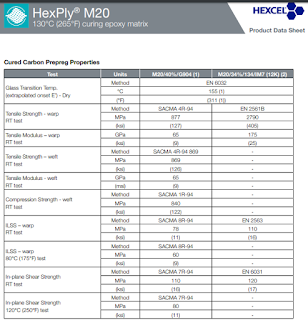
Data Sheet example from Hexcel

Properties such as material strength, toughness, porosity, etc all depend on variables such as the alloy, fabrication method, cure temperature, and ambient humidity during fabrication.  Understanding these material properties in the context of how the materials are to be used is one of the basic tenets of being an engineer, product developer, or manufacturer.

So to see this work happening at Georgia Tech for Knit Structures is pretty exciting.

If you think about a simple stockinette fabric, the problem statement gets complex very quickly.

Stockinette, Twined, In the Round, Hand-spun Tibetan Mastiff

First, Stockinette is the simplest of knit structures.... all of the stitches are the same and all of the stitches are facing the same direction.... Garter, while (generally) easier to make, is a more complex structure, because the stitches face opposite directions at each row.

So if we consider a sample of Stockinette stitch and what needs to be quantified in order to make a useful mathematical model, first the structure needs to be considered
    • how loads are applied to the fabric
    • how loads travel thru the fabric structure
Credit: Elisabetta Matsumoto

then the following variables need to be considered:
  • fiber preparation and spinning technique for each single
    • worsted or woolen
    • long or short draw
    • top, roving, cloud, raw
  • structure of the yarn
    • single, plied, number of plies
    • spin and ply directions
    • ply technique - same, opposite, Navajo, cabled
  • Fabric Construction
    • knit technique - Continental vs. English
    • knit method - standard, double, twined
    • gauge of the stitch with respect to gauge of the yarn used
  • Intended Mode of Use
    • flat, shaped, layered
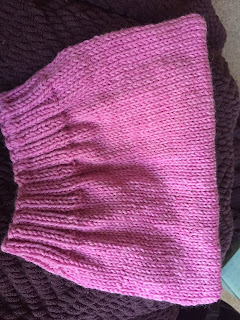
Stockinette with Ribbed Cuff, Standard, In the Round,
Commercially Processed Wool blend

Once all of this is mathematically identified and bounded, the data has to be established for fiber content.... be it single sourced (breed or variety) or a blend (alloy).
    • cotton, hemp
    • wool
    • alpaca
    • bamboo, flax
    • nylon, polyester, rayon
    • steel, aluminum
    • carbon, fiberglass, Kevlar
Then ultimately there is variation within each breed and variety.  As a hand spinner and breeder, I know that not all alpaca is created equal.  There is variation with respect to breed (Huacaya, Suri), between animals, and within each animal (blanket, neck, legs and belly).
    • thickness (Coarse-to- fine)
    • staple length
    • strength (you've heard of tender fleeces or fleeces with breaks)
    • crimp (amplitude and frequency).
It doesn't take much to recognize how complex this problem statement is.

Stockinette with lace edging, Standard, Flat, Hand-spun Huacaya Alpaca

But understanding these properties can lead to better solutions for things like torn tendon repair and prosthesis.  The possibilities are quite exciting.

For more information, check out the Matsumoto Group at Georgia Tech.

Wednesday, March 13, 2019

Purl

This Pixar Short was brought to my attention recently via a LinkedIn post made by one of my colleagues.

I found it interesting and timely.  I was knitting with hand spun yarn and contemplating writing a post about this topic, but wasn't coming to a place that was adding value.

Then, I actually witnessed the middle part of this video in person... There was a large group of people on my flight, presumably from a large financial institution, given the logos several of them were wearing.  I had the opportunity (unfortunate, since I didn't have a choice) to witness their interactions.


They were loud, chauvinistic, and primarily men.  The few women with the group were equally loud and cracking the type of "manly" jokes displayed in this video.

The video is well done and only about 9 minutes long.  I think the topic is worth contemplation.

Friday, March 8, 2019

Fiber Arts Friday: Stitches West

It finally happened.  I went to Stitches West.


At the encouragement of a friend who lives nearby and often works at the show, I was able to fit it into my schedule.

I have family in the Bay Area, who I wanted to spend time with too, so I did not take any of the classes offered... but I did attend a couple of the evening programs and went to the market.

Having only been to Estes Park, Taos, and Interweave's Yarn Fest, all of which are comparatively small, so this event was a very different experience.

First a few things.... there are two paths to register.... one is to buy market tickets and the other is to register for evening programs or classes.... I have no idea why these are on two different systems.

There was no where I found on the website stating that attending the evening programs also granted access to the market... I bought the (non-refundable) market tickets first... then found out I didn't need to on the emailed receipt for the evening sessions.  :-/

I also found their website to be disorganized and difficult to navigate.

So aside from the fact that I paid for my visit twice, I did enjoy the event.

Franklin Habit was entertaining.


The Fashion Show was fun.


The Market was crowded.


There was a lot (!) of color.  According to my friend, this year was toned down.


I met StevenBe and The Shiba Guyz.


The parking at the Santa Clara Convention Center was easy and (surprisingly) free.

It was wonderful to see so many people sporting their handmade goods.


Since this was primarily a yarn market, there were a lot of kits and samples.  I certainly like being able to see what yarn looks like in a finished product so I enjoyed seeing the finished samples.


But in listening to the conversations happening around me, it became clear that a whole lot of people really like kits.


I liked what they did in this booth... on a few tables at the front, they had finished samples from the books shown and the yarn used together... so while these weren't set up in kits, they had all of the related items together.... my retail-loving Hubba would have been proud.  :-)


Knitters are industrious people.  We find small moments to make progress on our projects, including waiting in line for a Fashion show.  ;-)


The little bit of color I did buy was due to this piece.  I liked it at the Fashion Show and happened to speak with it's Designer the next day.  Tho the colors I chose were not quite as bright.


In spite of being almost overwhelmed by the amount of color on display at this show,


I did find a few things that had to come home with me.


I think there's a good chance I'll go back to Stitches West.

Happy Fiber Arts Friday!

Wednesday, March 6, 2019

Colorado Kennel Club, 2019

This year we brought Wilma to the famed National Western Stock Show Complex.


She was the only female and only class Tibetan Mastiff exhibited.


She was awarded Best Opposite Sex (BOS) and Best Owner-Handled (OH) both days.


She had a wonderful time meeting people and dogs.


She passed the Canine Good Citizen (CGC) test, the CGC Advanced test, and the CGC Urban test. 

At the encouragement of the examiner, we attempted the CGC Trick Dog test, but like most TMs and LGD breeds, she's not keen on doing tricks for the sake of doing tricks.  She did manage to complete two of five tricks, which was two more than I expected.  ;-)

As I've mentioned before, this in one of our favorite shows because it draws a large non-dog-show crowd, so we have the opportunity to introduce the breed to people who have never seen a Tibetan Mastiff in person.

Sunday, March 3, 2019

Seven Years

Today, my horoscope suggested I stop and reflect on the recent seven years.

I often check in with myself in the spring, but usually I am focused on what is still to be done.  So I figured this could be a good exercise.  I do think it's a good idea to stop to look back at accomplishments and progress.


Seven years ago today, was March 2012.

We bought our farm in October 2009.  Our Alpaca Herd arrived on New Year's Eve 2009 after being agisted for 2 years.  So in March 2019 we had been on our own farm for 2.5 years, been full-time Alpaca Farmers for 2.25 years and had Tibetan Mastiffs for 1 year.


We have since bred a fine litter, learned how to show dogs in conformation events, had several BOB awards and group placements.  We have been invited to the National Owner Handled Series all but one year.  We are recognized as mentors in LGD behavior, specifically as it related to Tibetan Mastiffs.


Fiber-wise my skills have improved dramatically, both in spinning and knitting.  I have received multiple awards at our County Fair and donated a piece for auction.


I've learned how to put up shelf-stable food....both water bath and pressure canning.

I built my shearing business up to a point to where I had no time off and have since reduced it so we could spend the spring working on other important things.

Both professional photographers and documentarians have visited our farm and I've had my own photos published.

I've learned a lot about merchandising and how/what I want Alpacamundo's retail business to look.  We dropped our very first order off at a mill which means we will have commercially-spun yarn available for sale next winter.

We've made a group of wonderful friends in our chosen location of Northern Colorado.

I supported Hubba while he pursued Paralympic dreams and we celebrated our 21st Wedding Anniversary.

In addition to being a farmer, breeder, and fiberista, I have been a consultant and an employee.  I have traveled a lot, not so much, and am currently travelling a lot.


While I have been laid off four times in the last seven years, I was able to return to building Flying Objects three years ago and am currently working on a super exciting project.

Certainly this isn't everything we've accomplished in the last seven years, and I am still longing for the day when I can focus on being a full-time farmer, breeder, and fiberista.  This has been a good exercise and puts me in a pretty good mood.

Happy Almost Spring!